

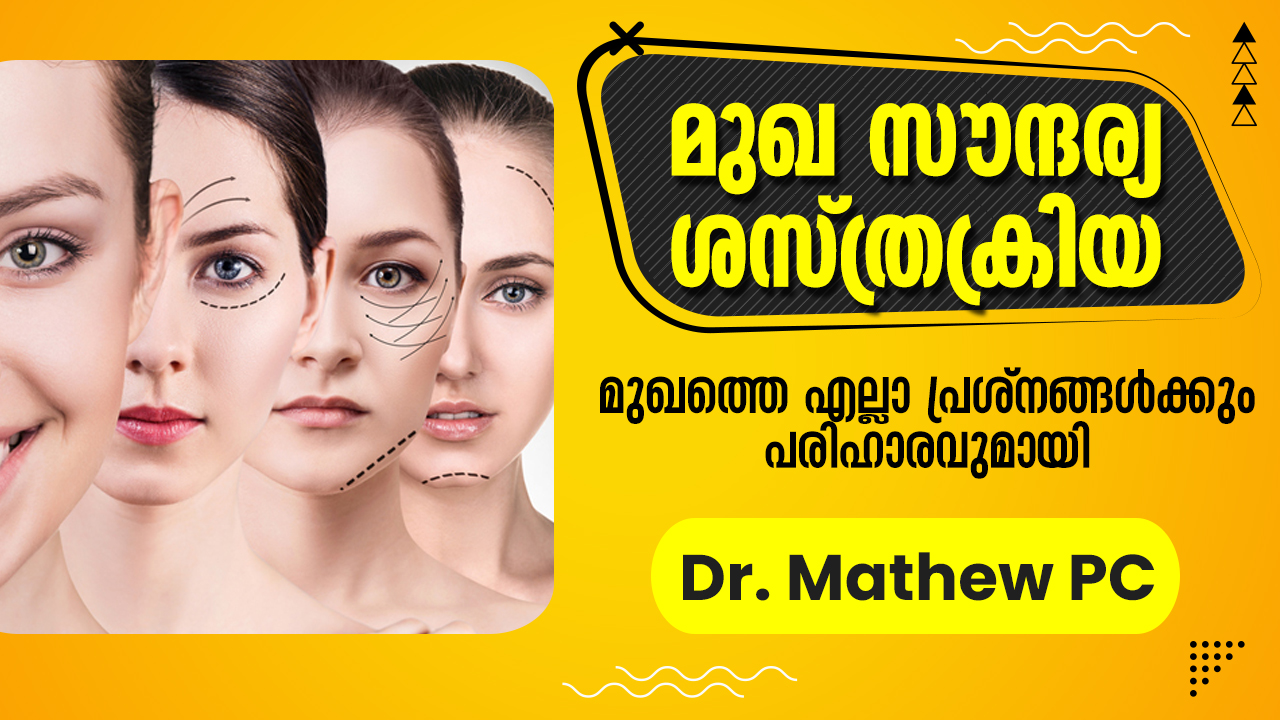
Facial Cosmetic Surgery in Kerala: Surgical and Non-Surgical Options, Preparation and Recovery
Learn about facial cosmetic surgery in Kerala: surgical and non-surgical options, how to prepare, hospital stay, risks and recovery.

Facial cosmetic surgery reshapes structures of the head and neck, such as the nose, ears, chin, cheekbones and neckline, to correct an injury or a birth-related feature, to reverse signs of ageing, or to bring facial features into better proportion. It includes surgical procedures and non-surgical options, and the right choice depends on the concern and your health. This guide explains facial cosmetic surgery in Kerala: the types of procedures, how to prepare, what to expect in hospital, risks and recovery. Facial cosmetic surgery services are available at Newface, Chengannur, Kerala.
Also read: Facial Cosmetic Surgery in India, Facial Surgery in Kerala, Rhinoplasty in Kerala, Jaw Surgery in Kerala
What Is Facial Cosmetic Surgery?
Facial cosmetic surgery is used to change the shape of structures in the head and neck, such as the nose, ears, chin, cheekbones and neckline. It may be done to correct a facial injury or illness, to change a birth-related feature, to reverse some signs of ageing, to correct contour irregularities, or to bring facial features into proportion with one another. It is performed by surgeons with the relevant training, such as oral and maxillofacial surgeons, plastic surgeons and ENT (ear, nose and throat) surgeons, depending on the procedure.


-
Reconstructive and Cosmetic Facial Surgery
Facial surgery is broadly of two kinds:
- Reconstructive surgery: repairs or rebuilds facial structures affected by birth differences such as a cleft lip and palate or prominent ears, injuries, burns, previous surgery or disease. It may also be needed after treatment of conditions such as skin cancer.
- Cosmetic surgery: improves the look of the facial structure and features. Common procedures include facelift, eyelid surgery, rhinoplasty, chin and cheek implants, liposuction and procedures to reduce wrinkles.
Surgical Procedures
- Rhinoplasty and septoplasty: rhinoplasty reshapes the nose and can also improve breathing. Septoplasty corrects a deviated nasal septum, mainly to improve breathing. Read more about rhinoplasty in Kerala.
- Blepharoplasty: surgery on the upper and/or lower eyelids to improve drooping lids and the appearance of the eyes.
- Brow lift: raises sagging brows and reduces forehead wrinkles.
- Facelift (rhytidectomy): tightens the skin and underlying tissues of the face and neck to reduce sagging and wrinkles.
- Neck or chin liposuction: removes excess fat from under the chin or neck.
- Chin and cheek procedures: implants or surgery that change the projection of the chin or cheeks. Read more about genioplasty.
- Otoplasty: reduces the prominence of the ears.
- Jaw surgery: repositions the jaws to correct bite and facial balance. Read more about jaw surgery in Kerala.
- Facial reconstruction: repairs facial defects caused by trauma, previous surgery or disease, including scar revision, and correction of birthmarks and congenital differences of the skull, palate and lips.

Non-Surgical Options
Some concerns can be treated without an operation:
- Injectables: botulinum toxin relaxes the muscles that cause some wrinkles, and dermal fillers, such as hyaluronic acid, calcium hydroxylapatite and poly-L-lactic acid fillers, restore volume. The effects are temporary and need repeating.
- Chemical peels and microdermabrasion: improve skin texture and tone.
- Laser skin resurfacing: may be used to improve the smoothness of skin.
These treatments are not a substitute for surgery in every case, and your doctor will advise what is suitable.
How to Prepare for Facial Cosmetic Surgery
Knowing what to expect will help you feel at ease. Before surgery:
- Have an assessment, so your surgeon can explain the procedure, the alternatives and the risks.
- Tell your surgeon about your medical history, medicines and allergies, and follow instructions on which medicines to stop.
- If you smoke, stop for the period your surgeon advises, because smoking slows healing.
- Follow the instructions on eating and drinking before surgery.
- Arrange for someone to help you and take you home.
Hospital Stay and Aftercare
Most cosmetic facial surgery does not need a long hospital stay. Some operations can be done as day surgery, and others need an overnight stay or two, depending on how extensive the surgery is. Before you leave, your surgeon will explain how to care for the incision, any diet needs, which medicines to take or stop, and which activities to avoid. Stitches may be removed at a follow-up visit, usually about a week later, if they do not dissolve.
Recovery After Facial Cosmetic Surgery
Many people return to work one to two weeks after surgery, once the swelling and bruising have settled and their appearance has improved, but this depends on the procedure. Some swelling can last longer, and the final result becomes clear over time. Follow your surgeon’s instructions, and contact your doctor if you have heavy bleeding, fever or increasing pain or swelling.
Risks of Facial Cosmetic Surgery
Depending on the procedure and your health, risks can include nausea, numbness, bleeding, blood clots, infection, scarring, asymmetry, reactions to the anaesthetic, a result that does not match your expectations, and the need for further surgery. Your surgeon should explain the risks that apply to you. Results are not guaranteed and vary from person to person.
What Affects the Cost of Facial Cosmetic Surgery in Kerala?
The cost depends on the procedure, the surgeon’s fees, the hospital, anaesthesia, the length of stay, tests and follow-up. A surgeon can give you an estimate after assessing you.
Questions to Ask Before Surgery
- Which procedure suits my concern, and what are the alternatives, including non-surgical ones?
- What are the risks that apply to me?
- What can I realistically expect from the result?
- Will I need to stay in hospital, and for how long?
- What does recovery involve?
Frequently Asked Questions
What is facial cosmetic surgery?
It is surgery used to change the shape of structures in the head and neck, such as the nose, ears, chin, cheekbones and neckline, to correct an injury or birth-related feature or to reverse signs of ageing.
What types of facial cosmetic surgery are available?
Common procedures include rhinoplasty and septoplasty, eyelid surgery, brow lift, facelift, otoplasty, chin and cheek procedures, liposuction, jaw surgery and facial reconstruction. Non-surgical options include injectables, chemical peels and laser resurfacing.
What are the risks of facial cosmetic surgery?
Possible risks include nausea, numbness, bleeding, blood clots, infection and anaesthesia-related effects, depending on the individual and the procedure.
Do I need to stay in hospital after surgery?
Many procedures do not need a long stay. Some are day surgery, while others need an overnight stay or two, depending on how extensive the surgery is.
How long is the recovery period?
Many people return to work one to two weeks after surgery, once the swelling and bruising have settled, but it depends on the procedure.
Information provided by: Dr. Mathew P C, [QUALIFICATIONS], Oral and Maxillofacial Surgeon. Registration status: [REGISTERED]. [STATE MEDICAL COUNCIL / NATIONAL MEDICAL REGISTER] registration no.: [NUMBER].
This page provides general health information for education only. It is not a substitute for medical advice and does not promise or guarantee any result. Outcomes vary from person to person.
Newface, 8J4F+X7X, Hatchery Junction, Chengannur, Kerala 689122. Phone: +91 8330077198