

Pierre Robin Syndrome Treatment in India: Symptoms, Causes and Care
Understand Pierre Robin syndrome: its symptoms, causes, diagnosis and treatment, including airway care and cleft palate surgery.

Pierre Robin syndrome is a congenital condition in which a baby is born with a small lower jaw, a tongue that falls back, and upper airway obstruction, often with a cleft palate. Treatment depends on severity: mild cases are managed with positioning, feeding support and monitoring, while severe cases may need airway support and surgery. This guide explains the symptoms, causes, diagnosis and treatment of Pierre Robin syndrome in India. Cleft palate care is available at Newface, Chengannur, Kerala.
What Is Pierre Robin Syndrome?
Pierre Robin syndrome, also known as Pierre Robin sequence, Pierre Robin malformation or Pierre Robin anomaly, is a congenital condition affecting the face. It is characterised by an unusually small lower jaw, a tongue that sits further back than usual, and upper airway obstruction. A cleft palate, commonly U-shaped, is present in many patients. Genetic changes may play a role in some cases.
Signs and Symptoms of Pierre Robin Syndrome
The position of the tongue towards the back of the mouth makes it more likely to fall towards the throat when the baby lies on the back. Common features include:
- Breathing difficulty: the tongue can block the airway, especially when the baby lies on the back. This ranges from mild to potentially life-threatening, and can also happen during sleep (obstructive sleep apnoea).
- Feeding difficulty: air and food pass through the mouth and throat, so feeding can be hard. This can lead to choking (aspiration), and slower weight gain than expected.
- Acid reflux: children with Pierre Robin syndrome have a higher rate of gastro-oesophageal reflux.
- Cleft palate: an opening in the roof of the mouth, which is often wider and more U-shaped than a typical cleft palate.
When to Seek Urgent Care
Get emergency medical help if a baby has trouble breathing, bluish lips or skin, pauses in breathing, or chokes during feeds.
Causes of Pierre Robin Syndrome
The exact cause is not fully known. The most accepted idea is that a small lower jaw early in pregnancy pushes the tongue back and up into the mouth, which stops the palate from closing normally. Changes in DNA near the SOX9 gene, which plays a part in bone growth, have been found in some people with isolated Pierre Robin syndrome. In some cases the condition is part of another syndrome and is inherited in the same way as that syndrome. Rarely, it runs in families.
How Is Pierre Robin Syndrome Diagnosed?
The condition may sometimes be suspected on a prenatal ultrasound, but it is often diagnosed after birth. Facial differences may be noticed on physical examination at the time of birth. There is no single test for isolated Pierre Robin syndrome, although genetic testing can look for changes near the SOX9 gene. When a syndromic form is suspected, a geneticist can advise on further tests.
Treatment of Pierre Robin Syndrome in India
Treatment is planned for each baby, and is often managed by a team that may include paediatricians, neonatologists, ENT specialists, surgeons, feeding specialists and speech therapists.
- Positioning and monitoring: infants need close monitoring for breathing and feeding problems. Under medical supervision, positioning the baby on the stomach or side may help keep the tongue from falling back. Parents should not position a baby this way at home unless the treating doctor has advised it, as sleeping on the stomach carries risks for infants.
- Airway support: if positioning is not enough, a small tube called a nasopharyngeal airway may be placed through the nose to keep the airway open. When obstruction is more significant, a breathing tube may be placed in hospital, and, rarely, a surgical opening in the windpipe (tracheostomy) is needed.
- Feeding support: special bottles or nipples, or feeding through a tube, may be needed so that the baby gets enough nutrition safely.
- Surgery on the tongue or lower jaw: in selected severe cases where the airway stays blocked, procedures such as tongue-lip adhesion or lengthening of the lower jaw (mandibular distraction) may be considered.
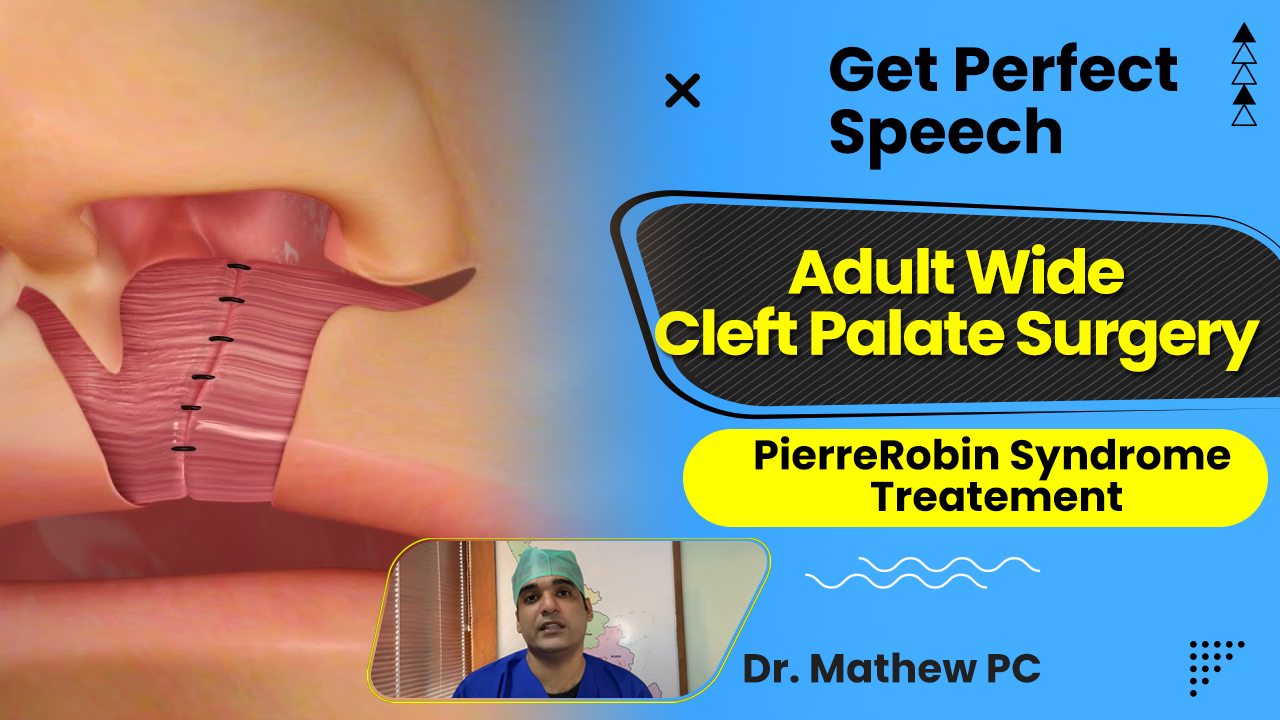
- Cleft palate repair: where a cleft palate is present, it is usually closed surgically, commonly between 12 and 18 months of age. The timing depends on the child’s health, feeding and growth, and is decided by the surgical team. A cleft palate does not close on its own. Read more about cleft lip and palate surgery in Kerala.
- Follow-up care: ear, hearing and speech follow-up are important, because children with a cleft palate can have ear infections and speech difficulties. Read more about speech after cleft palate surgery.
In many children the small lower jaw shows catch-up growth over the first years of life, so jaw surgery is not always needed. Later in life, jaw alignment is reviewed, and jaw surgery may be considered once growth is complete if a bite problem remains.
Questions to Ask Your Child’s Doctors
-
What is the severity of my child’s airway and feeding problem?
-
What treatment is planned, and what are the alternatives?
- What are the risks of each procedure?
- When will the cleft palate be repaired, if present?
- What follow-up is needed for hearing, speech and growth?
Frequently Asked Questions
What is Pierre Robin syndrome?
It is a congenital condition with a small lower jaw, a tongue that sits further back than usual and upper airway obstruction, often with a cleft palate.
What are the symptoms?
Breathing difficulty, especially when lying on the back, feeding problems, choking, and slow weight gain.
How is Pierre Robin syndrome treated?
Treatment depends on severity. Mild cases are monitored and positioned under medical supervision. More severe cases may need airway support or surgery, and a cleft palate is usually closed surgically.
When is cleft palate surgery done?
Commonly between 12 and 18 months of age, as decided by the surgical team.
Does the small jaw need surgery?
Not always. In many children the lower jaw shows catch-up growth in the first years of life.
Can Pierre Robin syndrome be prevented?
The exact cause is not fully known, so there is no known way to prevent it. Early assessment and care help manage breathing and feeding problems.
Information provided by: Dr. Mathew P C, [QUALIFICATIONS], Oral and Maxillofacial Surgeon. Registration status: [REGISTERED]. [STATE MEDICAL COUNCIL / NATIONAL MEDICAL REGISTER] registration no.: [NUMBER].
This page provides general health information for education only. It is not a substitute for medical advice and does not promise or guarantee any result. Outcomes vary from person to person.
Newface, 8J4F+X7X, Hatchery Junction, Chengannur, Kerala 689122. Phone: +91 8330077198
Follow Newface: Instagram | Facebook | YouTube