

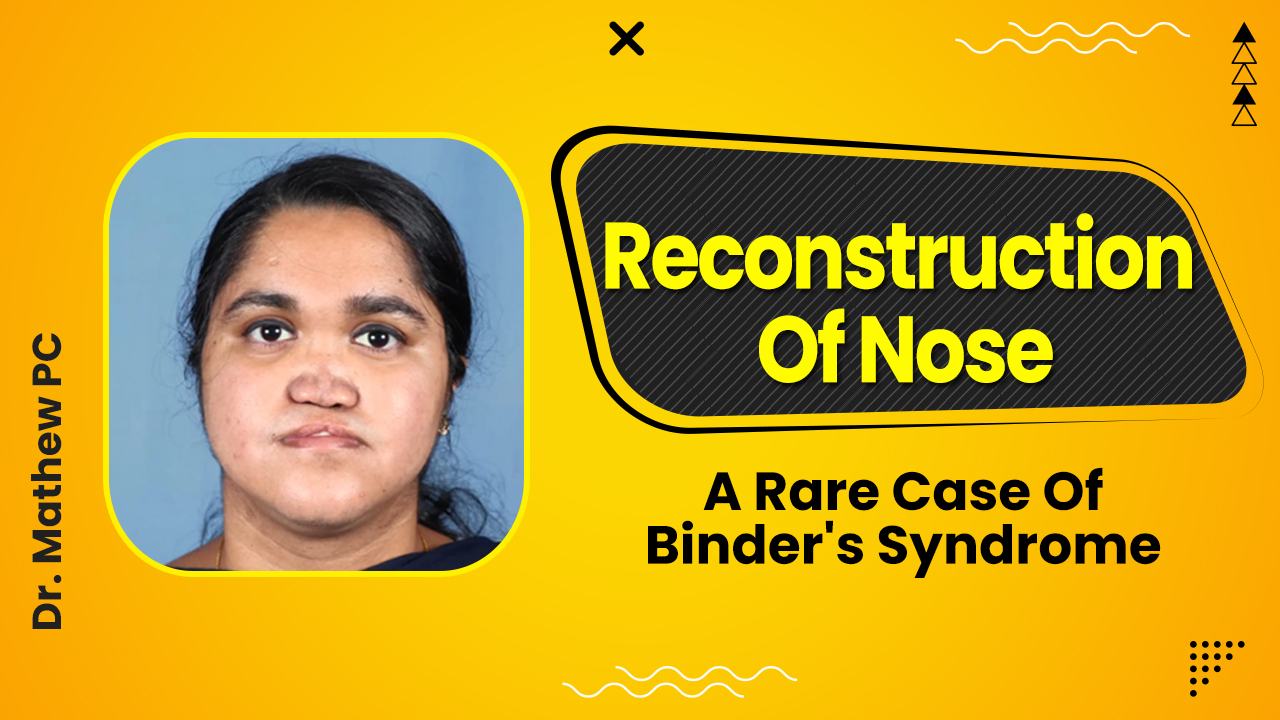
Maxillonasal Dysplasia (Binder's Syndrome): Symptoms, Causes and Treatment in India
Understand Binder's syndrome (maxillonasal dysplasia): symptoms, causes, diagnosis and treatment options in India.
Maxillonasal dysplasia, also called Binder’s syndrome, is a rare condition present from birth in which the middle of the face is underdeveloped. It typically involves a short, flat nose, a small upper jaw and, often, an underbite. The condition cannot be reversed, but the nasal and jaw problems can be treated with surgery and orthodontic care. This guide explains the symptoms, causes, diagnosis and treatment options for Binder’s syndrome in India.
Newface in Chengannur offers rhinoplasty and jaw surgery in Kerala, and Oral and Maxillofacial Surgeon Dr. Mathew PC has over 16 years of experience in facial surgery.

What Is Binder’s Syndrome?
Binder’s syndrome, also known as maxillonasal dysplasia or nasomaxillary hypoplasia, is a rare congenital malformation of the face. It affects the development of the central face, the nose and parts of the upper jaw. It appears during early pregnancy and is present at birth.
The condition is characterised by an underdeveloped nasal bridge, a short nose, a missing or poorly developed anterior nasal spine (the bone that supports the base of the nose), and an underdeveloped upper jaw (maxilla). This can lead to an underbite (malocclusion) and an appearance of facial imbalance.
Treatment usually involves surgery and orthodontic care. Nasal reconstruction with bone or cartilage grafts is the most common type of surgery. Because grafts can be partly absorbed over time, some patients need more than one operation.
Causes of Binder’s Syndrome
The cause is not fully understood. In most cases it appears to occur sporadically, meaning without a known family history. A few families with more than one affected member have been reported, which suggests that genetic factors play a role in some cases. Researchers think that it may result from a mix of genetic and environmental factors, but this is not proven.

Symptoms of Binder’s Syndrome
Features may vary from person to person. Common features include:
- A short, flat nose with an underdeveloped nasal bridge
- A shortened columella (the tissue between the nostrils) and crescent or comma-shaped nostrils
- An underdeveloped upper jaw, with the lower jaw appearing prominent
- An underbite (Class III malocclusion), which can cause chewing problems
- A missing or small anterior nasal spine
In more severe forms the underbite and the flatness of the nose are more pronounced. In milder forms the teeth may line up acceptably and the main difference is the flat area on either side of the nose.
When to See a Doctor
If you or your child has these features, see a doctor for a proper diagnosis. Early assessment helps plan treatment at the right time.
Diagnosis of Binder’s Syndrome
Diagnosis can be difficult because the features overlap with other conditions and vary between individuals. It is usually made from the medical history and a physical examination of the face, nose and bite. X-rays and CT scans are used to confirm the diagnosis and to plan treatment. In some people other anomalies may be present, so a full assessment is advised.
Treatment of Binder’s Syndrome
There is no single standard treatment for Binder’s syndrome. Because the condition is rare, there are no large trials, and treatments are reported mostly in case reports and small series. Treatment is planned for each patient’s features and age, and often needs a team, which may include:
- Paediatricians
- Oral and maxillofacial surgeons and plastic or craniofacial surgeons
- Orthodontists
- ENT specialists
- Psychosocial support for the patient and family
Treatment options include:
-
Orthodontic treatment: braces to align the teeth or to prepare for jaw surgery.
- Jaw surgery: a Le Fort I osteotomy moves the upper jaw to correct the bite, and a Le Fort II osteotomy moves the upper jaw and nose forward. Read more about jaw surgery in India and lower jaw protrusion surgery.
- Nasal reconstruction: cartilage or bone grafts, taken from sites such as the ear or rib, are added to the bridge and tip to improve projection and shape. Implant materials may also be used in some cases. Read more about rhinoplasty in Kerala.
- Treatment of narrow nasal passages, if present.
- Speech therapy, if speech is affected.
More than one surgery is often needed. The type and timing of each operation depend on the severity of the condition and the patient’s age. Jaw surgery is usually done after jaw growth is complete.
Binder’s syndrome can also have an emotional impact on the patient and their family, so psychosocial support should be offered.
About Dr. Mathew PC
Dr. Mathew PC is an Oral and Maxillofacial Surgeon at Newface with over 16 years of experience in facial and jaw surgery, including rhinoplasty and jaw surgery in India.
Frequently Asked Questions
What is Binder’s syndrome?
Binder’s syndrome, or maxillonasal dysplasia, is a rare congenital condition in which the middle of the face is underdeveloped, with a short, flat nose, a small upper jaw and often an underbite.
Can Binder’s syndrome be cured?
It is present from birth, so it cannot be reversed, but the nasal and jaw problems can be treated with surgery and orthodontic care.
What are the symptoms?
A short, flat nose, shortened columella, crescent-shaped nostrils, an underdeveloped upper jaw and an underbite.
What is the treatment?
Treatment is planned for each patient and may include orthodontic treatment, jaw surgery and nasal reconstruction with grafts, often in more than one stage.
When is surgery done?
The timing depends on the severity and the age of the patient. Jaw surgery is usually done after jaw growth is complete.
Book a Consultation
To discuss treatment for Binder’s syndrome, book a consultation with Dr. Mathew PC.
Phone: +91 8330077198